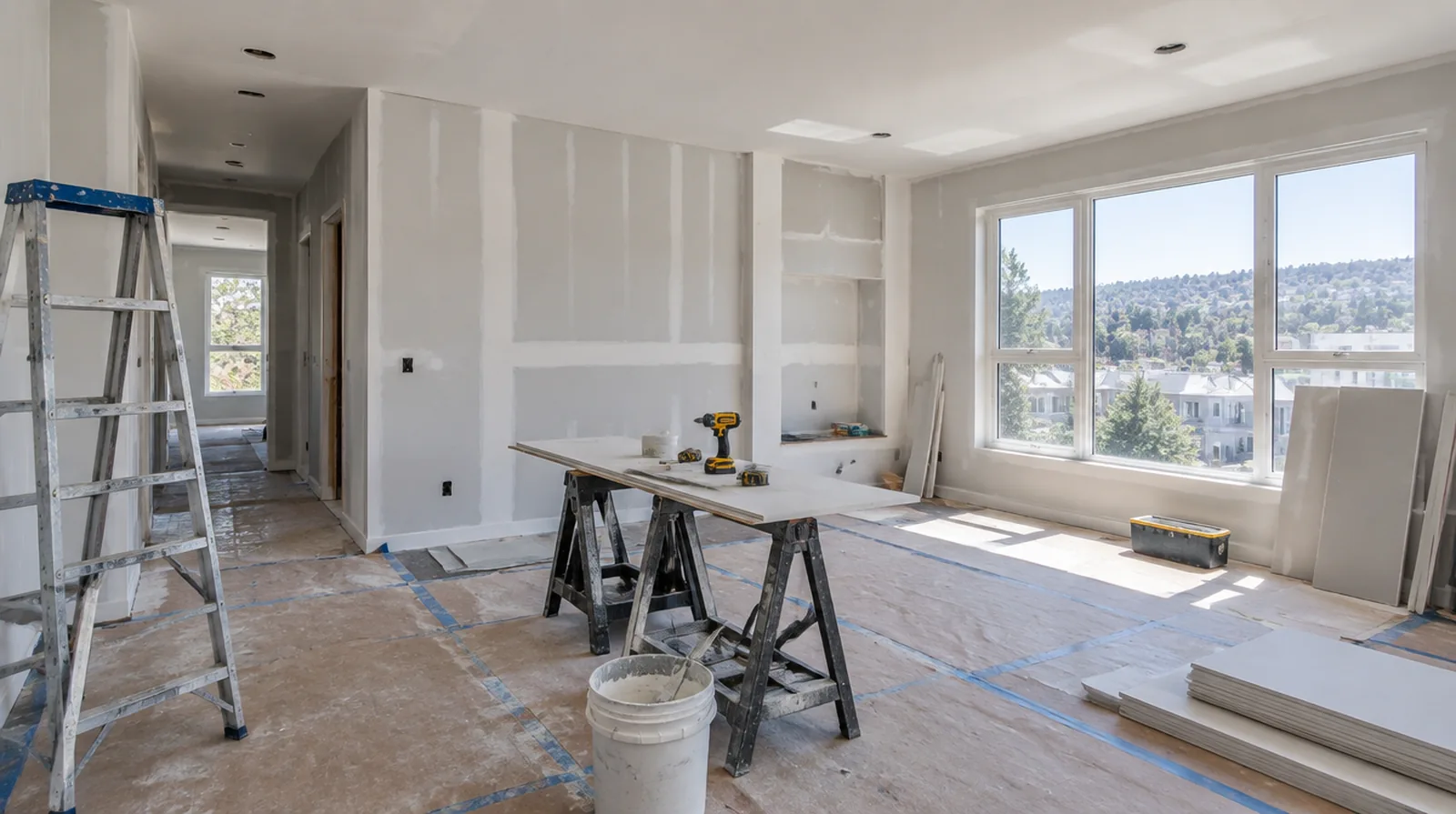
A plan built around the room, not only the patch
Before a room can be decorated confidently, the drywall work needs a clear purpose and a stable base. San Mateo Drywall Company brings together options for San Mateo interiors where a wall, ceiling or partition needs attention. Describe the defect, its history and the desired finished appearance before deciding how much material to replace. Some surfaces need a localized patch, while others need broader preparation or a cause investigated by another trade. The aim of the planning stage is to separate those situations, not to hide every problem under the same coating. A written scope can then explain both the physical repair and the condition the next decorating stage will receive.
Ceiling Repair: cut back to sound material
Water softened gypsum and loose edges do not provide a dependable base for a new patch. Cut to a stable boundary that also permits secure fixing and an effective finishing blend. For this part of the project, describe the remaining decorative preparation clearly so another contractor can price that stage accurately. See the ceiling repair guide for the scope questions, preparation stages and finishing decisions specific to that work.
Soundproof Drywall: identify the noise path
Voices passing through a shared wall are differing from footsteps transmitted through a floor structure. A useful assessment starts with the type of sound and the path it follows. For this part of the project, reserve sufficient time for the coating stages after drywall work rather than counting only the installation period. See the soundproof drywall guide for the scope questions, preparation stages and finishing decisions specific to that work.
Water Damage Drywall Repair: verify drying readiness
A dry looking outer face does not prove that concealed framing and insulation are ready to enclose. The project should identify who verifies the cavity is ready before replacement panels close it again. For this part of the project, describe the nearby alterations and the sequence between those changes and the first noticeable defect. See the water damage drywall repair guide for the scope questions, preparation stages and finishing decisions specific to that work.
Drywall Finishing: inspect the whole wall
Checking only the joint lines misses transitions near corners, ceiling edges and electrical boxes. Check the finished plane under the planned lighting and from a side angle where possible. For this part of the project, separate hands on labor from drying intervals instead of treating every visit as a full day of active work. See the drywall finishing guide for the scope questions, preparation stages and finishing decisions specific to that work.
Texture Matching: control application conditions
Compound consistency and application distance affect how a sprayed pattern lands on the wall surface. Room conditions and drying rate also influence when a knockdown pass should be made. For this part of the project, tell the finisher its intended sheen and color while the surface preparation standard is still being agreed. See the texture matching guide for the scope questions, preparation stages and finishing decisions specific to that work.
Popcorn Ceiling Removal: check for painted coatings
Paint over a textured coating could change how readily the material releases. A small controlled assessment helps explain labor and potential damage to the underlying surface. For this part of the project, review the finish from ordinary room positions using the lighting conditions that were agreed for the work. See the popcorn ceiling removal guide for the scope questions, preparation stages and finishing decisions specific to that work.
Drywall Installation: lay out the joints
A thoughtful sheet layout limits awkward seams and keeps weak transitions away from the corners of openings. The installer should consider both panel support and the surface finishing that follows. For this part of the project, record their dimensions separately and describe the boundary of the treatment on each surface. See the drywall installation guide for the scope questions, preparation stages and finishing decisions specific to that work.
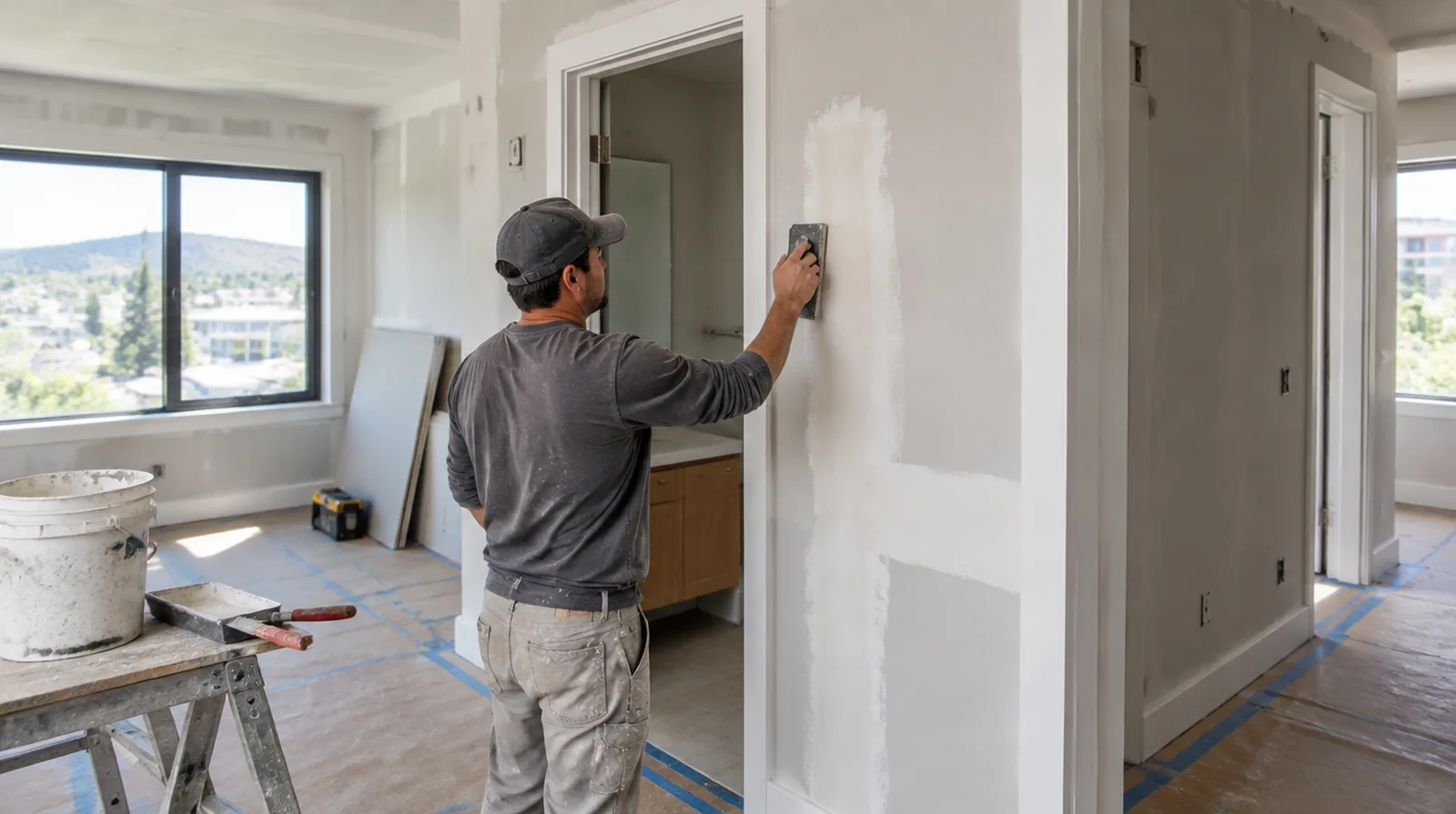
Skim Coating: define the smoothing target
Flattening a light texture is differing from correcting deep waves across an entire wall. The scope should describe what the skim is expected to improve and what remains outside that finish treatment. For this part of the project, agree containment and cleaning measures before settling the way the room will be staged. See the skim coating guide for the scope questions, preparation stages and finishing decisions specific to that work.
Drywall Repair: identify the cause
A dent from moving furniture calls for a different repair than a joint that repeatedly opens beside a door. Check whether the wall surface feels firm and whether the defect has changed since it first appeared. For this part of the project, allow clearance for moving board through the doorway and space to use the finishing tools effectively. See the drywall repair guide for the scope questions, preparation stages and finishing decisions specific to that work.
Commercial Drywall: manage occupied areas
Where adjoining spaces stay operational, define both dust protection and an explicit construction boundary. Discuss noise and cleanup expectations in relation to the actual operations of the property. For this part of the project, ask what happens during each stage and when the space needs to remain undisturbed between coats. See the commercial drywall guide for the scope questions, preparation stages and finishing decisions specific to that work.
Access and drying conditions in San Mateo
Think through the daily use of the property while planning condo and townhouse refresh. Questions about building parking garages and elevator bookings can change the setup even when the visible repair is small. In San Mateo, mild coastal weather with morning fog makes it sensible to review the room environment rather than rely on an automatic overnight drying assumption. Access, protection and coat readiness each belong in the sequence. For keeping noise and dust within HOA rules, confirm who evaluates the condition before it is covered and what happens if the first inspection reveals more work. A delivery route, a safe storage location and an agreed work boundary help the renovation proceed without treating the rest of the building as an unplanned material staging area.
Compare the same finishing boundary
Read the scope as a sequence from protection to handover rather than as a single repair label. The removal boundary, replacement method and finishing standard should connect to the decorative result you expect. Check which coatings are included and where the work stops against existing trim or adjoining walls. Ask how waste leaves the property and who is responsible for fittings that obstruct access. Those details make proposals more comparable and reduce assumptions between trades. If additional damage becomes visible, a clear change process lets the condition be reviewed before the original work package expands beyond what was agreed.
Arrange the information before the next step
Before the next project discussion, collect information that helps distinguish the symptom from its history. Show the whole wall or ceiling as well as the damaged spot, give rough dimensions and note changes over time. Mention any recent work nearby and whether the surface has been patched before. Include the finish you want after painting and the parts of the property that need to remain usable. A photograph supports a conversation but cannot verify everything inside a cavity. For address and service area information, use the contact page. The form sends project requests for review; please do not include sensitive information.
Read about the project approach or view contact and planning details.
More planning details for San Mateo
San Mateo condos and townhouses often share walls with neighbors, so noise and dust rules matter as much as the repair itself. Check HOA hours, elevator bookings and where a work vehicle can park in the garage. Mild coastal weather is good for drying, but foggy mornings can keep rooms cool.